Uncategorized
Which of the Following Statements About Peptide Bonds Are True?
Oct
Understanding which of the following statements about peptide bonds are true is essential for mastering biochemistry, molecular biology, and protein structure. Peptide bonds are the chemical links that connect amino acids together to form peptides and proteins. Their unique properties help determine how proteins fold, function, and interact with other molecules.
If you are preparing for a biology or biochemistry exam, knowing the key peptide bond properties can make multiple-choice questions much easier to solve.
What Is a Peptide Bond?
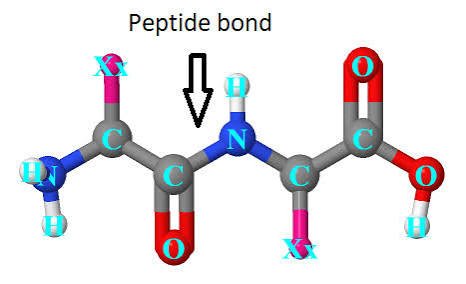
A peptide bond is a covalent bond formed between the carboxyl group (-COOH) of one amino acid and the amino group (-NH₂) of another amino acid. During this reaction, a molecule of water is removed, making the process a condensation or dehydration reaction.
The resulting linkage has the structure:
-CO-NH-
This bond forms the backbone of peptides and proteins and connects amino acids in a specific sequence.
Which Statements About Peptide Bonds Are True?
Several important statements about peptide bonds are correct:
1. Peptide Bonds Are Covalent Bonds
A peptide bond is a strong covalent bond. It is not an ionic bond or a hydrogen bond. Its formation creates a stable connection between neighboring amino acids in a polypeptide chain.
2. Peptide Bond Formation Releases Water
When two amino acids join, the carboxyl group of one reacts with the amino group of another. One molecule of water is released during peptide bond formation. This is why peptide bond formation is described as a condensation or dehydration reaction.
3. Peptide Bonds Have Partial Double-Bond Character
One of the most important peptide bond properties is its partial double-bond character. Resonance between the carbonyl group and nitrogen gives the C-N bond greater stability and restricts its rotation.
As a result, the atoms involved in the peptide bond tend to remain in a relatively planar arrangement.
4. Peptide Bonds Usually Have a Trans Configuration
Most peptide bonds occur in the trans configuration, because this arrangement generally reduces steric interference between neighboring amino acid side chains. However, peptide bonds involving proline have a greater tendency to occur in the cis configuration than other peptide bonds.
5. Peptide Bonds Are Polar
The peptide bond contains a carbonyl group and an N-H group, making it polar. These groups can participate in hydrogen bonding, which is particularly important for the formation and stabilization of protein structures such as alpha-helices and beta-sheets.
What Happens When a Peptide Bond Is Broken?
Peptide bonds can be broken through hydrolysis, a reaction involving water. During protein digestion, enzymes called proteases or peptidases catalyze the hydrolysis of peptide bonds, breaking proteins into smaller peptides and eventually amino acids.
This process is essential because the body must break dietary proteins into smaller components before they can be absorbed and used.
Key Facts to Remember for Exams
When answering a question asking “which of the following statements about peptide bonds are true?”, look for statements saying that peptide bonds:
- Connect amino acids in peptides and proteins.
- Form between a carboxyl group and an amino group.
- Are covalent amide bonds.
- Form through a condensation reaction that releases water.
- Have partial double-bond character because of resonance.
- Are relatively rigid and planar.
- Are usually found in the trans configuration.
- Contribute to the structure of proteins through hydrogen bonding.
- Can be broken through hydrolysis.
Final Takeaway
The peptide bond is one of the most important chemical features of proteins. Its covalent nature provides stability, while its partial double-bond character creates rigidity and restricts rotation. Understanding peptide bond formation, structure, polarity, resonance, and hydrolysis gives you a strong foundation for studying protein structure and biochemistry.
So, when faced with a multiple-choice question asking which of the following statements about peptide bonds are true, focus on these core characteristics: covalent linkage, condensation reaction, partial double-bond character, planarity, polarity, and amino-acid connectivity. These concepts are frequently tested in biology, biochemistry, medical, and life-science examinations.
